
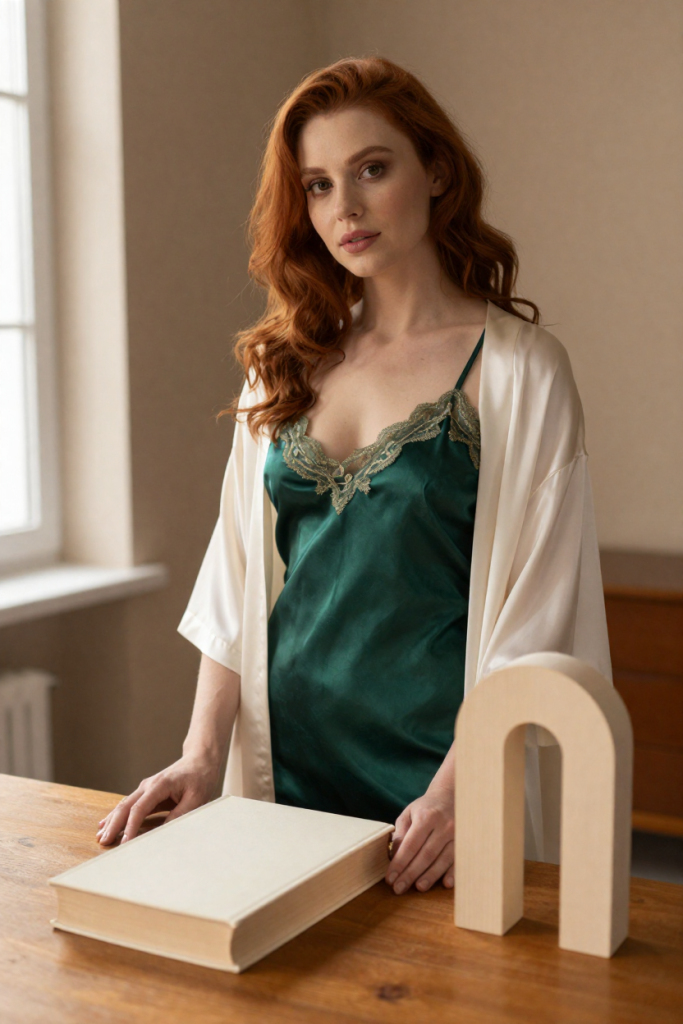
A series that is only a pile of frames exhausts its viewers and then its maker. The pile has no memory: frame forty owes nothing to frame four. This room structures its long series as chapters instead — runs of sittings that share one deliberate change, closed before the next begins — and the little arch on the desk is the chapter marker, the threshold each new run walks through.
How chapters run here
Open with a decision
A chapter begins with one written change: a new room, a new hour, a restyled wardrobe line. Written, because a change that is not written cannot be held.
Hold the chapter steady
Inside the chapter, only the chapter’s change varies. The card, the desk, the arch and the light discipline do not move.
Close before opening the next
The chapter’s keepers are culled, finished and published as a set. A chapter left open leaks into the next and blurs both.
Read back, a chaptered series has the shape of a biography — which is, of course, the book on the desk. Beginnings, middles, turns. Viewers feel the shape even when they cannot name it, and they return for the next chapter the way readers do: to find out what the same woman does next.
Questions
How long is a chapter?
A handful of sittings — long enough to explore its one change, short enough to close while it is still coherent.
Can chapters revisit an old room?
Yes, deliberately, as a later chapter. Revisiting by drift is what the structure exists to prevent.
What ends a series?
A decision, announced by the work — the final chapter closes the book. Series here end on purpose or not at all.